July 19, 2026
FAQ
Got questions? Great — we’ve got answers. If you don’t find what you’re looking for, drop us a line at support@evnsteven.app. We’re real people and we actually respond.
An unmetered charging station is just a regular outlet or basic L2 charger with no built-in meter — it delivers power but doesn’t track how much. They’re sometimes called “dumb chargers,” which sounds harsh but is accurate.
EVnSteven works around this by tracking the time each vehicle spends charging instead. Since power draw is constant for a given station and vehicle, time-based billing is accurate, fair, and requires zero extra hardware.
Costs are calculated per minute based on the rates you set as the station owner. You can set different rates for peak and off-peak hours, or offer free charging and just track usage.
Since real-world chargers aren’t perfectly efficient, we recommend adding a small markup — typically around 25% — to make sure you’re covering your costs. The built-in rate calculator can help you figure out the right numbers.
Sometimes a Level 2 station can deliver more power than a vehicle can actually accept. A 19 kW station paired with a vehicle that maxes out at 7.2 kW will only ever draw 7.2 kW — the rest goes unused. If you set your station’s power rating to 19 kW, you’ll overbill your residents. Nobody wants that.
The fix is simple: grab a clamp meter — an inexpensive tool available at any hardware store that clips around a wire and reads the current flowing through it without cutting into anything. No electrician required. With a specific vehicle plugged into a specific outlet, the power draw is constant. One measurement gives you the exact number to enter for that station and vehicle combination, and your billing will be spot on.
Not exactly — and that’s intentional. In many places, selling electricity directly requires a utility license, which most property managers don’t have. That said, we don’t know the laws everywhere, so it’s worth doing your own research to find out what’s allowed in your area.
EVnSteven sidesteps the issue entirely by billing for time, not energy. You’re charging a fee for use of an electrified parking spot. That’s legal in most places and keeps things simple for everyone.
Start with your electricity cost per kWh and use the built-in rate calculator to work out a baseline. Then factor in any overhead — maintenance, insurance, parking costs — and add a markup to cover it all and turn a small profit.
Setting rates is a bit of an art. Too low and you’re subsidizing your residents’ electricity; too high and nobody uses the station. Review your rates whenever your utility bill changes and adjust as needed.
Stepped rates are handled by you as the station owner. If your utility charges more once you exceed a certain usage threshold, you can update your rates mid-month to reflect the higher tier — your users will be prompted to agree to the new rates before their next session.
If you find yourself regularly crossing into a higher tier, it’s probably easier to calculate your average cost across both tiers and set a single rate that covers it. Less fiddling, same result.
Not yet. Rate DT applies different electricity rates during cold snaps when demand spikes — supporting it properly would require real-time weather data to trigger the right rate at the right time. It’s on our radar.
If this is important to your operation, email us at rate-dt-dual-energy@evnsteven.app. The more people ask, the faster it gets built.
You can configure a tax name (e.g. GST, VAT), a percentage rate, and your tax ID in the station setup. EVnSteven will apply it automatically to each session. If you’re not required to collect tax, just leave those fields blank.
When in doubt, check with your local tax authority — we’re good at charging apps, not tax law.
Yes, but it takes about 30 seconds. Just sign in with your Google or Apple account — no forms, no passwords, no waiting for a verification email.
You don’t have one. EVnSteven uses Google and Apple sign-in, so there’s nothing to reset. Just tap sign in and you’re in. One less thing to forget.
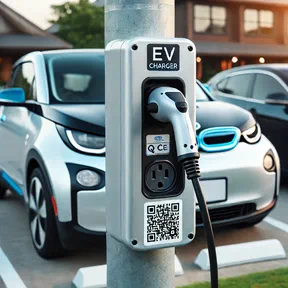
EVnSteven isn’t a station finder like PlugShare — it’s designed for specific locations where the station owner and users already know each other. To add a station, search by its ID (printed on the signage) or scan the QR code.
For finding public charging stations, PlugShare is your friend.
Email us at support@evnsteven.app. We’re here to help and we actually respond — no ticket queues, no bots.
Tap the Feedback button in the app or email us at feedback@evnsteven.app. We read everything and genuinely appreciate hearing from you.