November 14, 2026
Spend Thousands to Save 40 Cents?
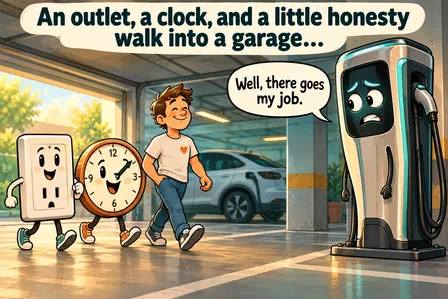
Your residents can plug in their cars to the wall outlets and get some decent range overnight. How do you know what to bill them without spending a bunch of money on a bunch of big complicated EV charging stations?
One solution is ask the vehicle how much energy was added to the battery. That’s easy and costs nothing. Like going to the gas station and filling from half to full. If you know a full tank costs $120, then it’s $60 for a half tank.
But how accurate is that?
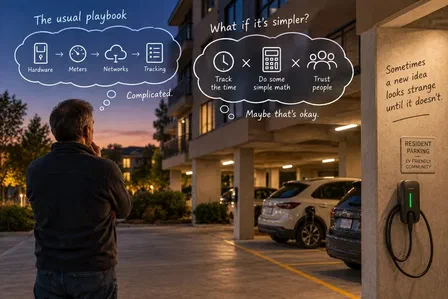
Another solution: Electricians know this trick. Multiply the charger’s power rating by the charging time and factor in the efficiency.
The results are close, but can you trust them?
If you want more accuracy, measure the actual electricity with a meter and compare it to the other two methods.
That’s exactly what I did. I rented a current meter and measured an entire charging session. Surprise! All three results were pretty darn close.
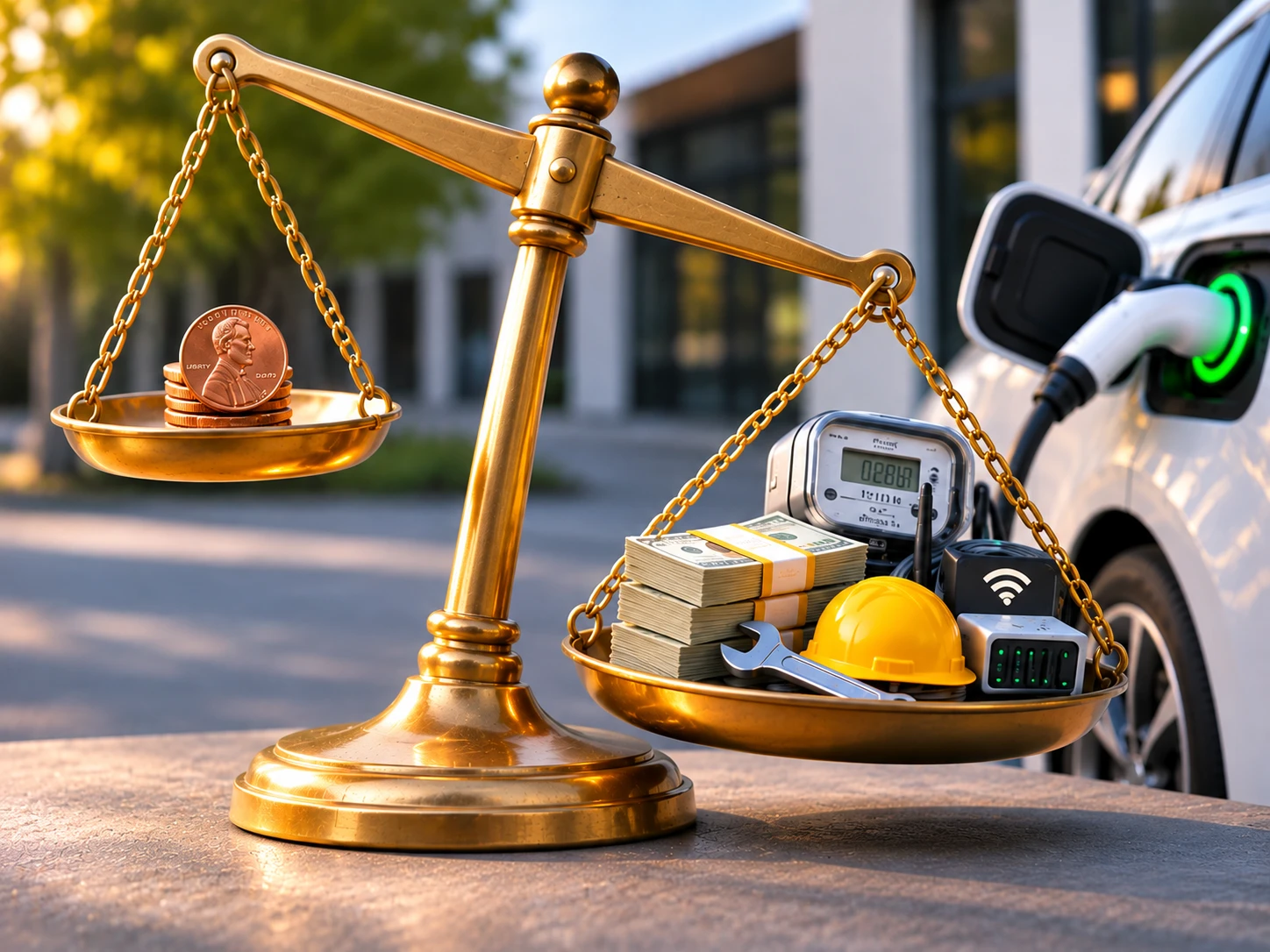
Now consider this: at ten cents per kWh, an 80 kWh charge costs $8. Even a 5% error is just 40 cents.
Would you spend thousands on equipment, installation, internet connectivity, and billing services to eliminate that uncertainty?
Would you take on the costs of maintaining that equipment for years just to prevent theft of $8 every once in a while, when you can just simply issue a fine for theft?
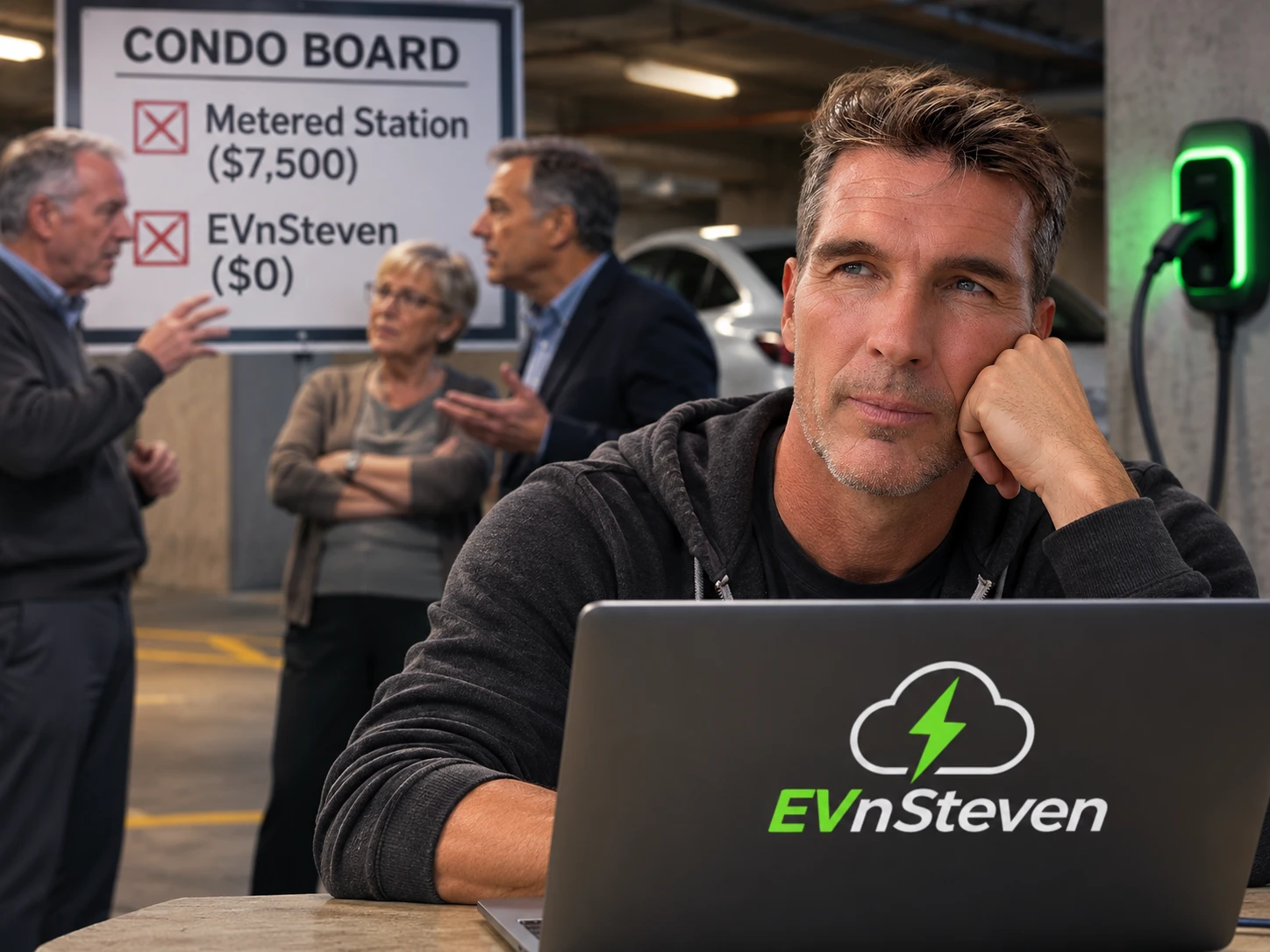
That’s why I built EVnSteven. It lets buildings bill for EV charging using outlets and charging stations they already have, using simple math and common sense.
Free for buildings. Just 12 cents per session for drivers.
Power to the people. Literally.
Your building is ready for EV charging.
Charge EVs at the outlets you already have. Drivers pay for the time they use.
Get EVnStevenSubscribe to EVnSteven Notes
We use your email only to send these notes. Unsubscribe from any email. Privacy policy